
Introduction
Succulent gardens have surged in popularity, captivating plant enthusiasts and casual gardeners alike. With their striking shapes, vibrant colors, and low maintenance requirements, succulents provide an excellent way to create beautiful arrangements that can thrive indoors and outdoors. However, the choice of container is more than just an aesthetic consideration; it significantly influences the health and growth of these plants. In this comprehensive article, we’ll delve into the myriad of options for containers suitable for succulent gardens, answering common questions and offering valuable insights along the way.
What Makes Succulents Unique?
Before we dive into the specifics of containers, it’s crucial to understand what makes succulents unique. Succulents are plants that have developed specialized tissues to store water, allowing them to thrive in arid climates. This adaptation leads to the following characteristics:
- Water Retention: Succulents retain moisture in their leaves, stems, or roots, allowing them to survive prolonged periods of drought.
- Variety: There are thousands of succulent species, each with different shapes, colors, and sizes, providing endless design possibilities.
- Low Maintenance: Generally, succulents require minimal watering and care, making them perfect for busy individuals or novice gardeners.
Understanding these traits will inform how we choose containers for them.
Why Are Containers Important for Succulent Gardens?
1. Drainage
One of the most critical factors in caring for succulents is ensuring proper drainage. Excess water can lead to root rot, a common issue in succulent cultivation. Containers must have drainage holes or mechanisms to allow excess water to escape.
2. Size
The size of the container affects the growth and health of succulents. A pot that is too small may restrict root growth, leading to stunted plant development. Conversely, a pot that is too large can retain too much moisture, causing the roots to rot.
3. Material
The material of the container influences weight, aesthetics, and watering frequency. Porous materials like terracotta allow for quicker evaporation of moisture, helping prevent overwatering. Non-porous materials like plastic may keep moisture for longer, requiring more attentive watering schedules.
4. Aesthetic Appeal
Succulent gardens are not just about plant care; they are also about artistic expression. The right container can enhance the visual impact of your garden, transforming a simple arrangement into a stunning focal point.
What Types of Containers Are Suitable for Succulent Gardens?
1. Terracotta Pots
Pros:
- Breathability: Terracotta is porous, allowing air circulation to the roots and facilitating moisture evaporation.
- Traditional Aesthetic: These pots have a rustic, classic look that complements most succulent arrangements.
Cons:
- Weight: Terracotta can be heavy, making it less ideal for large arrangements.
- Breakability: Fragile and can break easily if dropped.
Recommended Use: Ideal for both indoor and outdoor succulent arrangements where aesthetics and drainage are critical.
2. Plastic Containers
Pros:
- Lightweight: Ideal for larger arrangements or hanging displays.
- Variety of Designs: Available in countless styles, colors, and sizes.
Cons:
- Less Breathable: Not as porous as terracotta, which may lead to moisture retention and a higher risk of overwatering.
Recommended Use: Best for indoor succulent gardens where heavier pots are impractical.
3. Concrete and Cement Planters
Pros:
- Durable: Extremely durable and can withstand the elements outdoors.
- Modern Aesthetic: Offers a sleek, contemporary look ideal for modern décor.
Cons:
- Weight: Quite heavy, making them hard to move once planted.
Recommended Use: Perfect for outdoor succulent arrangements, especially in breezy conditions where stability is needed.
4. Ceramic and Glazed Pots
Pros:
- Aesthetic Flexibility: Available in various colors and glazes, allowing for personalized designs.
- Moisture Retention: Good for succulents that prefer somewhat moist conditions.
Cons:
- Weight: Heavier than plastic, requiring sturdy surfaces for placement.
Recommended Use: Ideal for indoor use and for more delicate arrangements.
5. Wood Containers
Pros:
- Unique Look: Offers a rustic charm that can complement any garden.
- Eco-Friendly: Biodegradable materials can harmonize with the environment.
Cons:
- Degradation: Wood can rot or break down over time, especially when exposed to moisture.
Recommended Use: Appropriate for outdoor succulent gardens when treated properly to resist moisture.
6. Hanging Planters
Pros:
- Space-Saving: Utilizes vertical space and adds dimension to gardens.
- Visual Interest: Creates a dynamic display when arranged at different heights.
Cons:
- Watering Challenges: More difficult to monitor moisture levels, requiring more frequent checks.
Recommended Use: Ideal for small spaces or urban settings.
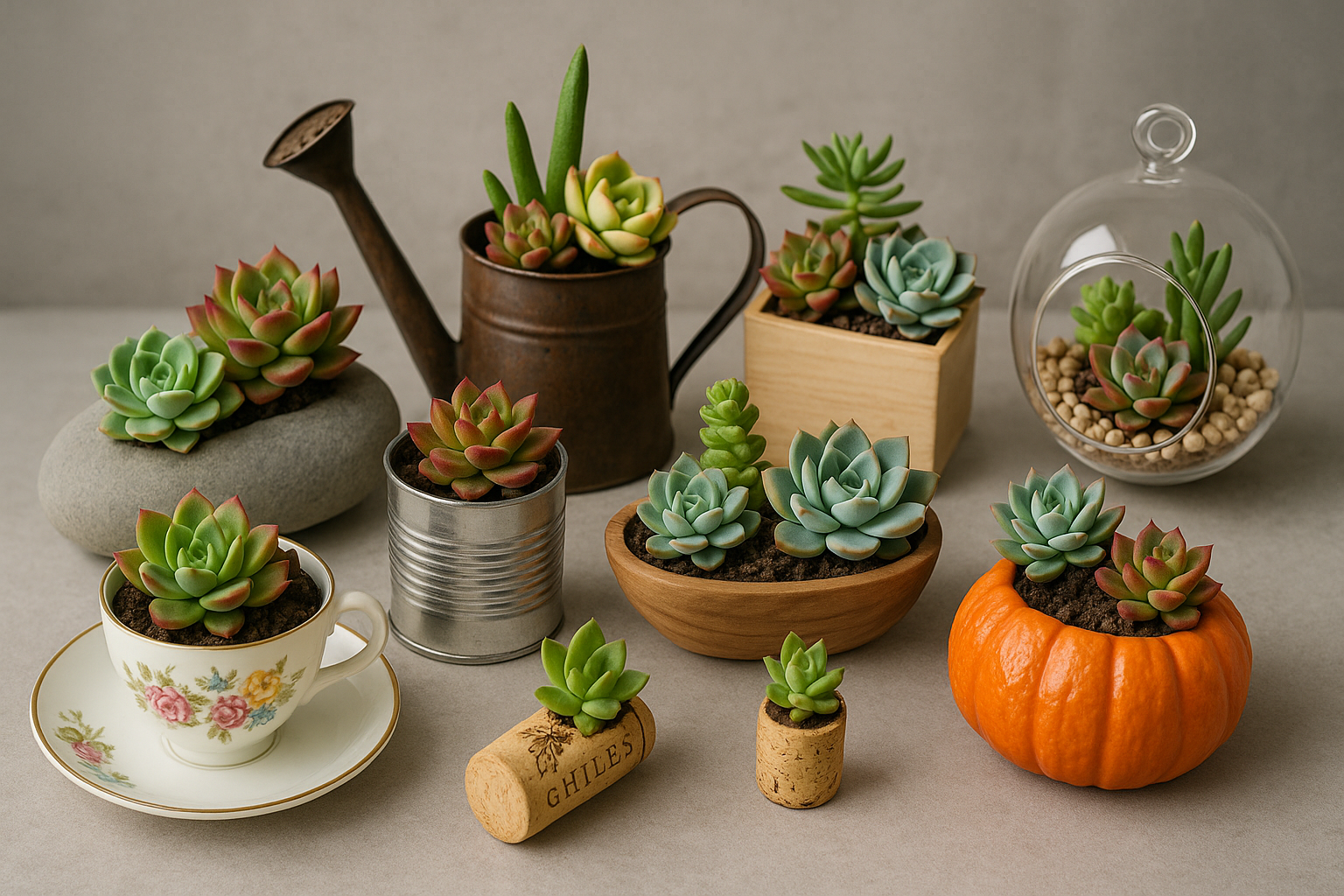
7. Repurposed Containers
Pros:
- Creative Outlet: Allows for creativity and uniqueness in arrangements.
- Cost-Effective: Can save money and reduce waste.
Cons:
- Drainage Issues: Many repurposed containers lack drainage holes and may require modification.
Recommended Use: Great for DIY enthusiasts who enjoy personalized touches in their garden.
How to Choose the Right Container for Your Succulent Garden
Step 1: Consider Plant Type
Different succulent species have varied needs. For example, plants like Echeveria prefer slight moisture, while Sedum species thrive with drier conditions. Research your specific plants’ needs to inform your container choice.
Step 2: Assess Location
Evaluate where your succulent garden will be located. Will it be indoors, outdoors, or in a shaded area? Consider how this affects moisture levels and sunlight exposure when choosing container material and type.
Step 3: Gauge Available Space
Take stock of where you plan to place your succulent garden. Choosing appropriately sized containers helps create balance and harmonizes with the surrounding area.
Step 4: Aesthetic Preferences
Decide the visual impact you wish to create. Are you seeking a minimalist look, or do you prefer a vibrant, eclectic design? Your aesthetic will guide your choice of container style and color.
How to Create a Thriving Succulent Garden in Containers
1. Layering
Drainage: Start by adding a layer of gravel or small stones at the bottom of your container to enhance drainage. This allows excess water to escape and weeds to be kept at bay.
2. Soil
Soil Mix: Use a well-draining cactus or succulent mix. You can also create your own by combining potting soil with coarse sand or perlite for aeration.
3. Planting
Spacing: Consider the eventual growth size of your succulents. Do not overcrowd; instead, give each plant adequate room to thrive.
4. Watering
Watering Practices: After planting, water thoroughly but allow the soil to dry completely before the next watering. Remember, succulents prefer submerged watering rather than misting or soaking their leaves.
5. Light and Temperature
Placement: Place your containers where they receive adequate sunlight—most succulents prefer a bright, indirect light source. Be mindful of extreme temperatures, as some succulents can be sensitive to frost or excessive heat.
FAQs About Containers for Succulent Gardens
1. What is the best material for succulent containers?
Answer: The best material often depends on the specific needs of your succulents and your aesthetic preferences. Terracotta is an excellent choice due to its breathability, while plastic is favored for its lightness and variety.
2. How can I make my container more decorative?
Answer: You can paint terracotta pots, wrap them with twine, or place them inside decorative baskets. Stencils can also add patterns or texture.
3. Can I use regular garden soil for succulents?
Answer: Regular garden soil often retains too much moisture for succulents. It’s best to use a specialized cactus or succulent mix for optimal growth.
4. How often should I water my succulents in containers?
Answer: Succulents typically need to be watered every 1-3 weeks depending on the environmental conditions. Always allow the soil to dry completely before watering again.
5. Can I mix different types of succulents in one container?
Answer: Yes, you can mix different types of succulents; however, make sure they have similar water and light requirements to thrive together.
Conclusion
Creating a succulent garden with the right containers is an engaging and rewarding experience. By understanding the unique characteristics of succulents, the essential role of containers, and various options available, you can set the groundwork for a thriving and visually stunning garden. Remember, experimentation is key; don’t hesitate to try out different styles, materials, and arrangements to find what works best for you. Happy gardening!