
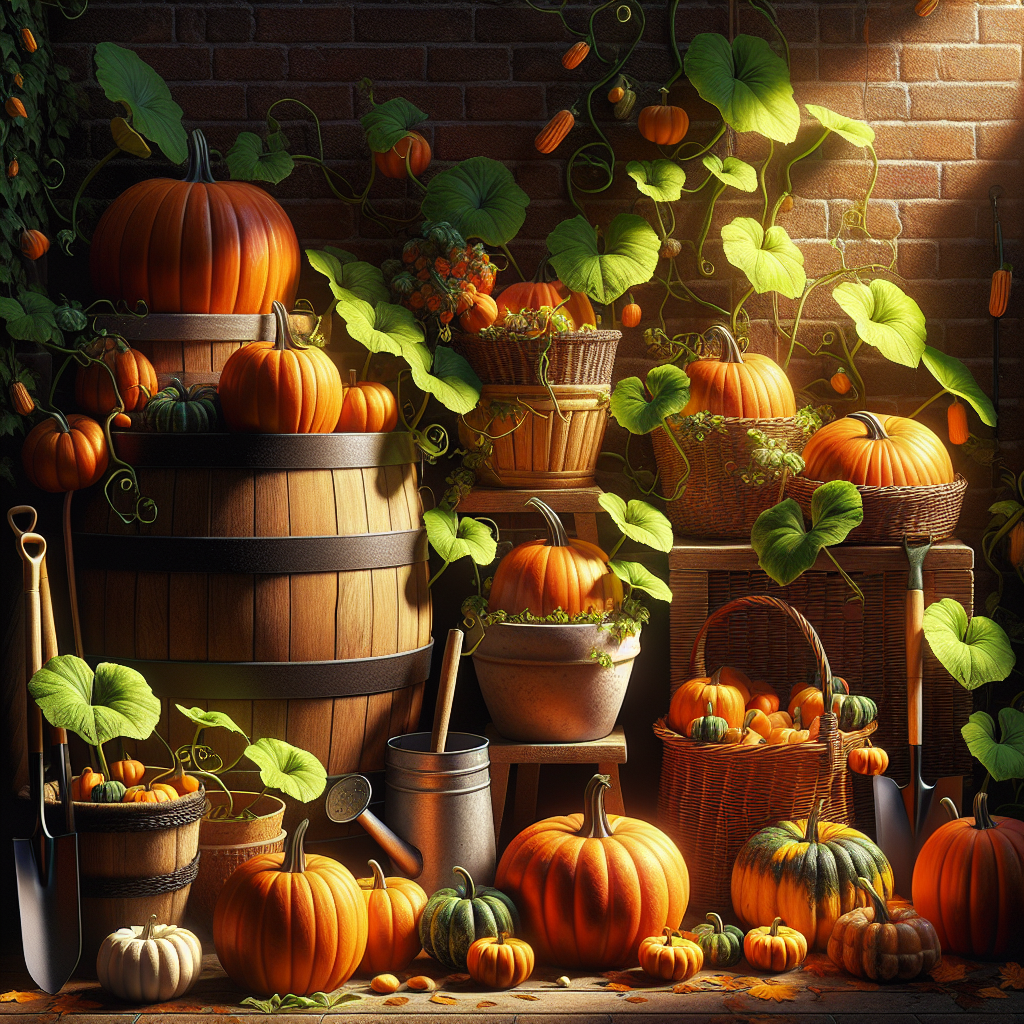
Pumpkin container gardening is a delightful way to cultivate one of autumn’s most iconic symbols from the comfort of your own balcony, patio, or small yard. Beyond its aesthetic appeal, container gardening allows for a more manageable approach to growing these hearty plants. In this comprehensive guide, we will explore everything you need to know about pumpkin container gardening—from choosing the right varieties to caring for your plants and harvesting those vibrant, orange beauties.
What is Container Gardening?
Container gardening refers to the practice of growing plants within containers instead of directly in the ground. This method is becoming increasingly popular among urban dwellers, those with limited space, or anyone looking to add greenery to their environment without committing to full-fledged gardening. Pumpkins, while typically seen sprawling across gardens, can thrive in containers with the right care and preparation.
Why Grow Pumpkins in Containers?
1. Space-Saving Solution
Container gardening offers flexibility, especially for those who lack a large garden space. No matter how small your outdoor area is, you can still enjoy the delight of growing pumpkins.
2. Mobility
Containers can be easily moved based on sunlight, weather conditions, or aesthetic preferences. This adaptability allows you to maximize the growing conditions for your pumpkins.
3. Pest Control
Containers can help reduce common garden pests. By elevating your plants, you can deter soil-borne pests and rodents while maintaining better control over the health of your plants.
4. Soil Quality
Container gardening allows you to control the soil quality directly, minimizing issues with drainage or soil composition that can affect plant health in traditional gardens.
What Varieties of Pumpkins Are Best for Containers?
1. Miniature Varieties
Miniature pumpkins like “Jack Be Little,” “Baby Boo,” or “Munchkin” are excellent choices for container gardening due to their compact size and vibrant colors.
2. Small Runner Varieties
Certain small runner varieties like “Sugar Pie” or “Spirit” can also thrive in containers. These pumpkins are perfect for pies and fall decorations.
3. Standard Varieties (with Caution)
While larger varieties, such as “Connecticut Field” and “Atlantic Giant,” can be grown in containers, they require more significant space and should only be grown in the largest containers available.
What Size Container Do I Need?
Recommendations
To successfully grow pumpkins, container size is crucial. Choose a container that is at least 5 gallons (about 19 liters) or more to provide adequate space for root development. Pumpkins have deep roots, and smaller containers will stunt their growth.
Depth and Width
- Depth: A minimum depth of 12 inches (30.5 cm) is ideal.
- Width: At least 18 inches (45.7 cm) in diameter is recommended for standard varieties.
Optimal Container Types
- Plastic: Lightweight and retains moisture well.
- Terracotta: Offers breathability but can dry out quickly—monitor moisture closely.
- Wooden Planters: Attractive but ensure they are lined to protect the wood from rotting.
What Soil Should I Use?
Pumpkins thrive in rich, well-draining soil. Here’s what to consider:
Soil Composition
- Organic Matter: Mix in compost or well-rotted manure for nutrients.
- Peat Moss: Incorporate peat moss for moisture retention.
- Sand or Perlite: This will help improve drainage.
Recommended Mix
Combine equal parts:
- Potting soil
- Compost
- Peat moss
How to Plant Pumpkins in Containers
Steps for Planting
-
Fill the Container: Fill your container with the prepared soil mix, leaving about an inch at the top to allow for watering.
-
Sow Seeds or Transplant:
- Seeds: Plant 2-3 seeds per container about 1 inch deep. Thin to one strong seedling after germination.
- Transplants: If starting indoors, transplant seedlings at least 2-4 weeks after the last frost.
-
Watering: Water the soil thoroughly after planting. Ensure excess water drains out.
Best Time to Plant
The best time to plant pumpkins is after the last frost date. Most regions will have the optimal planting period between late spring to early summer.
How to Care for Your Container Pumpkins
1. Watering
Pumpkins require consistent moisture. Check the soil’s top couple of inches; if it feels dry, water thoroughly.
Tips:
- Ensure containers have drainage holes to avoid waterlogging.
- Consider using a moisture meter for precise monitoring.
2. Fertilization
Pumpkins are heavy feeders. Use a balanced fertilizer or one high in potassium and phosphorus to encourage fruit development.
Application
- Start feeding pumpkins 3-4 weeks after planting.
- Follow package instructions for application rates.
- Consider a slow-release fertilizer, which will continue to nourish the plant over time.
3. Sunlight
Pumpkins thrive in full sun. Select a spot getting at least 6-8 hours of sunlight per day.
4. Pruning
Regular pruning can improve airflow and fruit development. Remove excessive leaves, especially those that block sunlight from reaching developing fruits.
How to Manage Pests and Diseases
Common Issues
- Squash Bugs: These can be hand-picked or controlled with insecticidal soap.
- Powdery Mildew: Allow for proper airflow and remove affected leaves. A mix of baking soda and water can help.
Prevention
Practice good sanitation and crop rotation if you’re replacing pumpkins after harvest to minimize recurring issues.
When and How to Harvest Pumpkins
Indicators of Ripeness
- Color: The pumpkin should have a vibrant orange color.
- Skin Hardness: The skin should feel hard and resist your fingernail’s indentation.
- Stem Condition: A dry stem signals readiness.
Harvesting Steps
- Use sharp pruning shears to cut the stem.
- Leave a few inches of stem attached to the pumpkin for longevity.
- Handle with care to avoid bruising.
Post-Harvest Care
- Store pumpkins in a cool, dry place to prolong shelf life.
- Wash off dirt but avoid excessive water to prevent rot.
Frequently Asked Questions
1. Can I Grow Pumpkins in a Small Space?
Absolutely! With container gardening, you can grow pumpkins in small spaces like balconies or patios.
2. How Often Should I Water My Container Pumpkins?
Water your pumpkins regularly, checking the soil. A general rule is to water deeply once every 2-3 days, possibly more frequently in hot weather.
3. Will Container Pumpkins Grow as Big as Garden Pumpkins?
Container pumpkins will generally be smaller. However, with the right care, you can still yield a good-sized harvest. For larger pumpkins, consider growing in the largest containers possible.
4. Can I Reuse Soil From Last Year’s Containers?
It’s recommended to amend used soil by mixing in fresh compost or organic matter. This will help replenish nutrients depleted by last year’s crops.
5. Should I Use Stakes or Trellises?
If you’re growing vining varieties in containers, consider using a trellis to support upward growth, conserving space and improving air circulation.
6. What Are the Best Companion Plants for Pumpkins?
Beneficial companions include corn, beans, and marigolds, which can deter pests while benefiting pumpkin growth. However, be cautious not to overcrowd the container.
Conclusion
Pumpkin container gardening offers a rewarding and enjoyable way to bring color and festivity to any small outdoor space. Through careful selection of pumpkin varieties, soil preparations, and attentive care, you can successfully grow vibrant pumpkins that not only add to your garden’s beauty but also serve as delightful decorations and delicious ingredients for fall recipes.
Whether for decoration, baking, or simply enjoyment, growing pumpkins in containers is not only possible but immensely satisfying. The joy of watching your pumpkins grow from tiny seeds into plump, orange fruits is an experience every gardener should relish. So grab your pots, some nutrient-rich soil, and start your pumpkin container gardening adventure!
This extensive guide is crafted to provide a wealth of information for both novice and experienced gardeners eager to explore the joys of pumpkin container gardening, answering key questions while maintaining an engaging narrative throughout.