
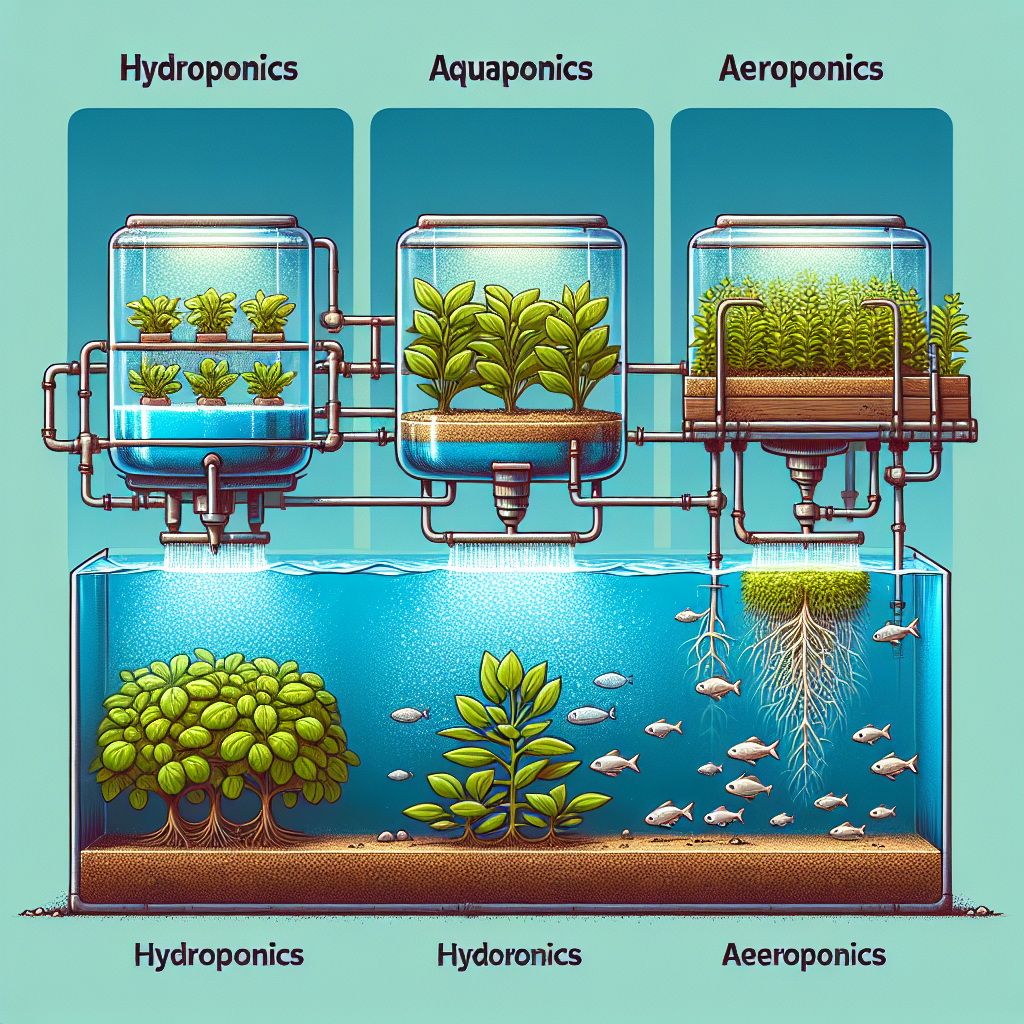
In recent years, the world has witnessed a surge in innovative agricultural techniques designed to increase food production while minimizing ecological impacts. Among these, hydroponics, aquaponics, and aeroponics have emerged as frontrunners in the quest for sustainable food systems. In this article, we will delve deep into these three methods, discussing their principles, benefits, challenges, and key differences. By the end, you’ll have a comprehensive understanding of their roles in modern agriculture.
1. Understanding Hydroponics
What is Hydroponics?
Hydroponics is a method of growing plants in a nutrient-rich water solution, instead of soil. This system allows the roots to absorb essential nutrients directly from the water, promoting faster growth and higher yields. Hydroponics is particularly beneficial in environments where soil conditions are poor, or where land space is limited.
Key Components
-
Growing Medium: While traditional soil is absent, hydroponic systems often incorporate inert growing mediums such as coconut coir, perlite, or rock wool. These mediums provide structural support for the plants while allowing for efficient water and nutrient access.
-
Nutrient Solution: The nutrient solution is a mixture of water and essential minerals (macronutrients like nitrogen, phosphorus, and potassium, and micronutrients like iron, magnesium, and calcium) that are vital for plant growth.
-
Water Management: Efficient water management is crucial, as hydroponic systems can use up to 90% less water than conventional farming due to their closed-loop systems.
Benefits of Hydroponics
- Faster Growth: Plants can grow up to 25% faster in hydroponic systems due to better nutrient availability and reduced competition from weeds.
- Space Utilization: Hydroponics requires significantly less space, making it ideal for urban environments or areas with unsuitable soil.
- Reduced Pest and Disease Exposure: By controlling the environment, hydroponic growers can minimize the risk of pests and diseases, increasing overall crop yield.
Challenges of Hydroponics
- Initial Cost: Setting up a hydroponic system can require a significant initial investment, especially for advanced technology like automated systems.
- Technical Knowledge: Successful hydroponics necessitates a solid understanding of nutrient management, water chemistry, and plant biology.
- Dependency on Technology: Many systems rely on electricity and technology, which may lead to complications if power issues arise.
2. Understanding Aquaponics
What is Aquaponics?
Aquaponics is an integrated system that combines hydroponics with aquaculture (the farming of fish). In this symbiotic environment, fish provide waste that serves as a nutrient source for the plants, while plants help purify the water for the fish. This closed-loop system mimics natural ecosystems and promotes a sustainable way of food production.
Key Components
-
Aquatic Life: Fish species such as tilapia, catfish, or trout are commonly raised in aquaponic systems. Their waste is a rich source of nutrients for the plants.
-
Plant Growth System: Similar to hydroponics, plants are grown in a nutrient-rich solution. The efficiency of nutrient absorption is enhanced by the presence of fish waste.
-
Water Filtration: Natural filtration processes enhance water quality. Beneficial bacteria convert toxic ammonia from fish waste into nitrates, which are usable by plants.
Benefits of Aquaponics
- Sustainable Resource Use: Aquaponics requires less water than traditional farming methods and creates a sustainable cycle of growth and waste management.
- Produces Multiple Products: Growers can yield both fish and plants, diversifying their income streams.
- Organic Certification: Aquaponics systems can qualify for organic certification under certain guidelines, appealing to health-conscious consumers.
Challenges of Aquaponics
- Complexity: Balancing both aquatic and plant systems can be technically challenging. Growers need expertise in both hydroponics and aquaculture.
- Fish Management Risks: Issues like fish disease or water quality can directly affect plant growth, requiring vigilant monitoring.
- Market Demand: While aquaponics is popular, it is still a niche market and may require growers to educate consumers about the benefits of their products.
3. Understanding Aeroponics
What is Aeroponics?
Aeroponics is a method of growing plants without soil, water, or a growing medium. Instead, the roots of plants are suspended in the air and periodically misted with a nutrient-rich solution. This method optimizes nutrient and oxygen delivery, leading to faster growth.
Key Components
-
Misting System: A pump delivers nutrient solution to a misting nozzle that sprays the roots of plants. This system ensures nutrient efficiency and oxygen delivery.
-
Root Support: Plants are typically supported in a structure that allows their roots to hang freely in the air, maximizing exposure to mist.
-
Environmental Control: Maintaining humidity and temperature is essential for success in aeroponics since the roots are exposed to the air.
Benefits of Aeroponics
- Optimal Growth: Aeroponics can lead to growth rates that are 20-30% higher than traditional methods due to improved oxygenation and nutrient availability.
- Minimal Water Use: This method uses even less water than hydroponics, making it exceptionally eco-friendly.
- Space-Saving: Similar to hydroponics, aeroponic systems can be vertically stacked, allowing urban farmers to produce more food in less space.
Challenges of Aeroponics
- Technical Proficiency Required: Properly functioning aeroponic systems require a high level of technical expertise and monitoring of multiple variables.
- Dependency on Equipment: Any failure in the misting system can lead to rapid plant stress or death, necessitating reliable technology and backup systems.
- Higher Initial Costs: Because of the technology involved, initial setup costs can be steep, potentially limiting access for beginner farmers.
4. Key Differences: Hydroponics vs. Aquaponics vs. Aeroponics
| Aspect | Hydroponics | Aquaponics | Aeroponics |
|---|---|---|---|
| Growth Medium | Inert media or none | Water-only with fish presence | Air-only with mist |
| Nutrient Source | Nutrient solution | Fish waste | Nutrient mist |
| Fish Component | None | Yes | None |
| Sustainability | Water-efficient | Highly sustainable | Very water-efficient |
| Complexity | Moderate | High | High |
| Initial Cost | Moderate | High | High |
| Primary Products | Plants only | Fish and plants | Plants only |
5. Frequently Asked Questions
Which system is the easiest to start for beginners?
Answer: Hydroponics is typically the easiest for beginners because it has a well-established network of resources, tutorials, and community support. Hydroponic systems range from simple to complex, allowing for entry at various levels without overwhelming new growers.
Can you grow anything in these systems?
Answer: While you can grow a wide variety of plants in all three systems, some are better suited than others. Leafy greens, herbs, and certain fruits (like strawberries or tomatoes) have shown great success across hydroponics and aeroponics. Aquaponics favors smaller, faster-growing plants and herbs, and some species of fish are better suited for beginners.
What are the ongoing costs associated with each system?
Answer: Ongoing costs will vary based on system size, type, and operation scale. Hydroponics usually involves replenishing nutrient solutions and managing the electricity for pumps and lighting. Aquaponics requires fish feed, water testing, and management of both plants and fish. Aeroponics also demands energy for misting systems and regular maintenance to prevent clogging.
How do I ensure pest control in these systems?
Answer: Integrated pest management (IPM) techniques, which can include beneficial insects, organic pesticides, or careful environmental control, are effective across all three systems. Hydroponics and aeroponics benefit from smaller pest populations, while aquaponics can utilize natural predators in the system.
Are there any health risks associated with these methods?
Answer: As with any agricultural practice, there are potential health risks. However, when managed properly, hydroponics, aquaponics, and aeroponics can produce safe, healthy food. Issues often arise from improper nutrient management or biosecurity, especially in aquaponics environments.
Can I scale these systems up for commercial farming?
Answer: Yes! All three methods can be scaled for commercial production. However, each comes with its own complexities, resource needs, and market demand considerations.
6. The Future of Urban Agriculture
As the world moves toward increasing urbanization, the demand for innovative agricultural practices becomes more essential. Hydroponics, aquaponics, and aeroponics offer solutions that not only meet the growing food demands of urban centers but do so with minimal ecological footprints.
These systems provide opportunities for local food production, reduced transportation emissions, and increased food security. As technology continues to advance—through improved systems, data analytics, and genetic research—urban agriculture is poised to transform our relationship with food.
Conclusion
Hydroponics, aquaponics, and aeroponics represent the future of food production. Each system has its own unique advantages and challenges, making them suitable for different needs and environments. By understanding their mechanics and applications, individuals and communities can adapt these systems to create resilient, sustainable food sources.
As we continue to face challenges like climate change, soil degradation, and population growth, innovative farming methods such as hydroponics, aquaponics, and aeroponics will play a pivotal role in shaping our agricultural landscape. Whether you’re a hobbyist gardener or a commercial grower, embracing one or more of these systems can lead to not just a greener future, but a more secure one.
In conclusion, with knowledge and dedication, these three innovative farming methods have great potential to feed the world sustainably in the coming decades, providing nutritious food while conserving resources. The choice between hydroponics, aquaponics, and aeroponics ultimately depends on your personal needs, resources, and environmental conditions. Each method holds promise; it’s up to you to find the best fit for your agricultural goals.