
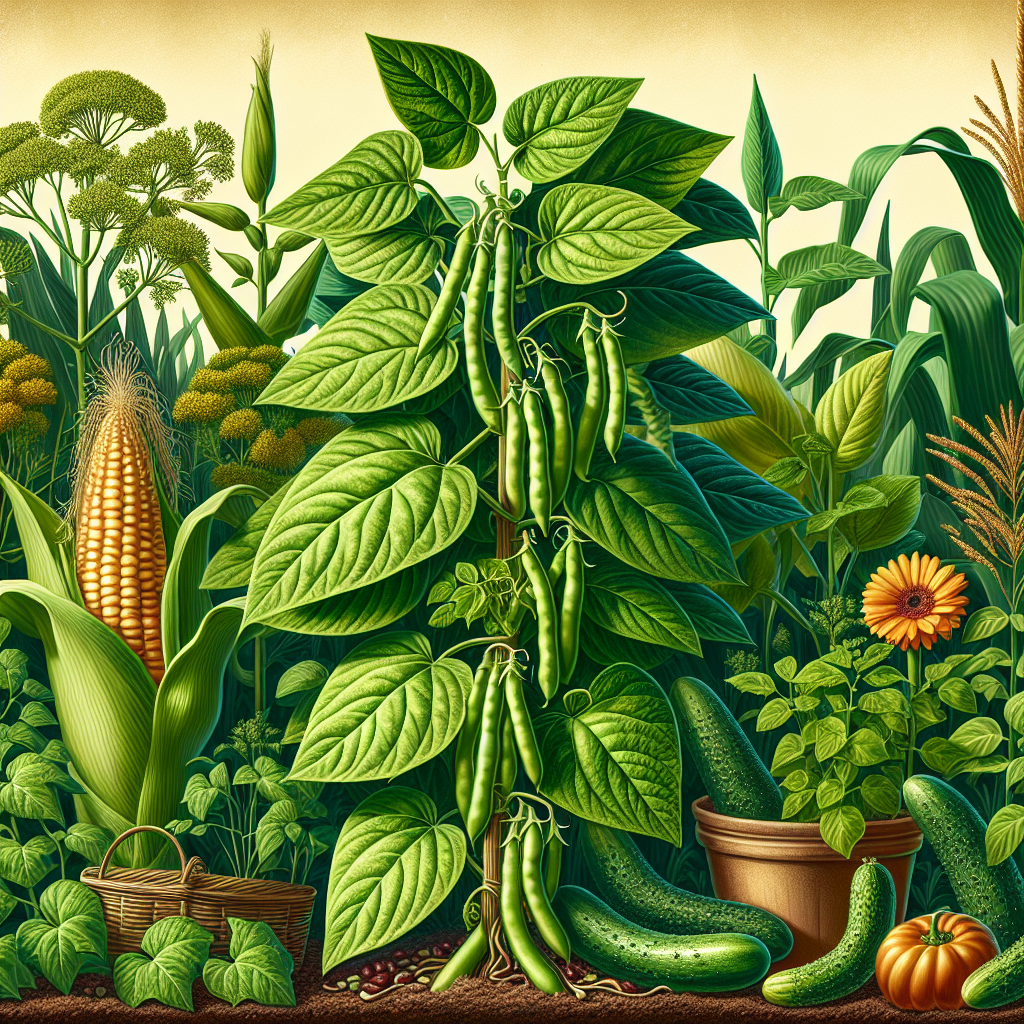
Companion planting is a gardening technique that involves growing plants together in a way that benefits one or both species. This age-old practice can improve growth, flavor, resistance to pests and diseases, and overall garden harmony. In the case of beans, a versatile and productive crop, companion planting can be particularly advantageous. Here, we’ll delve into the fascinating world of companion plants for beans, exploring their benefits, recommended pairings, and the science behind why these associations work.
What Are Beans and Their Growing Needs?
Beans belong to the legume family (Fabaceae) and are known for their high protein content and various culinary uses. They can be categorized into two main types: bush beans and pole beans.
Growing Conditions
- Light: Beans flourish in full sun, requiring at least six to eight hours of direct sunlight daily.
- Soil: They prefer well-draining, loamy soil with a pH between 6.0 and 7.0. Beans are nitrogen-fixing plants, meaning they can enrich the soil in which they grow.
- Water: Beans prefer moderate watering, with soil that is consistently moist but not waterlogged.
Why Companion Plant with Beans?
-
Enhancing Growth: Some plants exude compounds in the soil that assist bean plants in absorbing nutrients more efficiently or even encourage healthier root development.
-
Pest Control: Certain companion plants can deter common pests such as aphids, beetles, or nematodes, helping to keep bean plants healthy without the need for chemical pesticides.
-
Attracting Beneficial Insects: Companion plants can attract pollinators and predatory insects that control pest populations.
-
Soil Improvement: Some companion plants can enhance soil quality, making it more fertile through composting actions or root structures that promote aeration.
-
Maximized Space: When planning a garden, companion plants can help in utilizing space efficiently, particularly in a small garden setup.
Questions and Answers About Companion Plants for Beans
1. What Are the Best Companion Plants for Beans?
Several plants make excellent companions for beans, each offering unique benefits.
a. Corn
Benefits: Corn serves as a natural support for climbing pole beans, allowing the beans to grow upward instead of sprawling on the ground. Additionally, corn and beans complement each other nutritionally.
How They Work Together: Beans can fix nitrogen in the soil, which benefits the corn, while corn provides shade and structure for the beans.
b. Squash
Benefits: Squash plants, particularly summer and winter varieties, can form a living mulch, shading the ground and conserving moisture, which is beneficial for beans.
How They Work Together: This triad (beans, corn, and squash) is often referred to as the “Three Sisters” of Native American agriculture. The leaves of the squash plants can prevent weeds and retain soil moisture, creating a healthy growing environment for beans.
c. Thyme
Benefits: Thyme acts as a pest deterrent and can attract beneficial insects like predatory wasps.
How They Work Together: Thyme’s fragrance can confuse pests, masking the scent of the beans and protecting them from infestation.
d. Marigolds
Benefits: Marigolds are famed for their ability to repel nematodes and aphids.
How They Work Together: By planting marigolds next to beans, you can decrease the likelihood of pest invasion while adding color and beauty to your garden.
e. Sunflowers
Benefits: Sunflowers can act as a natural trellis for pole beans, supporting them as they grow.
How They Work Together: Additionally, sunflowers can attract pollinators and beneficial insects, while enhancing the visual appeal of your garden.
2. What Plants Should Be Avoided with Beans?
While there are many beneficial companion plants for beans, certain plants can hinder their growth or health.
a. Onions and Garlic
Drawbacks: Both of these plants have strong flavors and scents that can compete with or inhibit bean growth.
b. Beets
Drawbacks: Beets and beans often compete for nutrients, particularly nitrogen, which can stunt the growth of both plants.
c. Cucumbers
Drawbacks: When planted near beans, cucumbers can be overly competitive for nutrients, water, and sunlight, leading to stressed plants.
3. What is the Ideal Planting Strategy for Companion Beans?
Companion planting is an art form, and strategies can vary depending on garden size and design.
a. Spatial Arrangement
-
Intercropping: Plant beans between other companion plants. For example, alternate rows of beans with corn and squash to maximize yield and create a diverse ecosystem.
-
Layering: Utilize vertical space by growing climbing beans alongside sunflowers or corn. This not only saves space but also helps beans receive adequate sunlight.
b. Timing
- Staggered Planting: To maximize your garden’s productivity, consider staggering your planting times. For example, plant corn first, followed by beans inside the corn rows. Squash can be sown later to fill in the gaps.
4. How Can I Enhance the Benefits of Companion Planting?
a. Soil Enrichment
- Utilize Organic Matter: Incorporate compost into your soil before planting. This enriches the soil, providing nutrients that benefit both beans and companion plants.
b. Crop Rotation
- Rotate Crops: To prevent soil nutrient depletion and the build-up of pests, rotate your crops each season. For example, follow beans with root crops like radishes or carrots to use different soil zones.
5. Are There Specific Varieties of Beans That Are Better for Companion Planting?
Yes, different varieties of beans may have different companion planting benefits.
a. Bush Beans
Characteristics: These plants grow close to the ground and typically do not require supports.
Best Companions: Include marigolds and thyme to deter pests, and grow them alongside squash to maximize space.
b. Pole Beans
Characteristics: These varieties require vertical support as they grow higher.
Best Companions: Plant alongside corn and sunflowers to provide the necessary structure, while benefiting from nitrogen-fixing properties.
6. How Does Companion Planting Affect Bean Flavor?
Believe it or not, companion planting can influence the flavor of beans.
a. Nutrient Uptake
- Balanced Nutrients: Growing beans with nitrogen-fixing companions can enhance nutrient uptake, leading to plants that are not only healthier but produce tastier yields.
b. Soil Biology
- Microbial Activity: The presence of various roots and organic matter enriches soil biodiversity, enhancing the overall flavor of beans.
7. What Are Some Tips for Successful Companion Planting with Beans?
a. Start Small
Begin with a small area to understand the dynamics between beans and their companions.
b. Observe and Adjust
Keep a gardening journal to track which combinations work best, allowing you to expand successful pairings in the future.
c. Embrace Diversity
Consider planting various companion plants to foster ecological interactions that can lead to an overall healthier garden.
8. How Can I Incorporate Companion Planting into Organic Gardening?
a. Natural Pest Deterrents
Use companion plants to attract beneficial insects or repel pests, maintaining healthy thriving plants without the need for chemical pesticides.
b. Promote Soil Health
Focus on planting diverse crops that work together to improve soil quality, maintaining an organic approach.
c. Companion Planting as a Tradition
Adopt the companion planting traditions of various cultures, such as Native American methods, which emphasize the importance of biodiversity.
Conclusion
Companion planting with beans is a fascinating and beneficial practice that takes advantage of the natural relationships between plants. Beans thrive in diverse gardens, growing more robustly alongside companions like corn, squash, thyme, marigolds, and sunflowers. By taking care not to plant beans with incompatible species like onions or beets and following planting strategies that suit your garden space and style, you can create a thriving ecosystem that produces not only a bountiful harvest but also improved soil health and reduced pest problems.
As you embark on your journey into the world of companion planting with beans, remember that every garden is unique, and experimentation and observation will yield the best results. Through thoughtful pairing, you can unlock the full potential of your beans and create a garden that is not only productive and flavorful but also serves as a vibrant testament to the age-old art of companion planting. Happy gardening!