
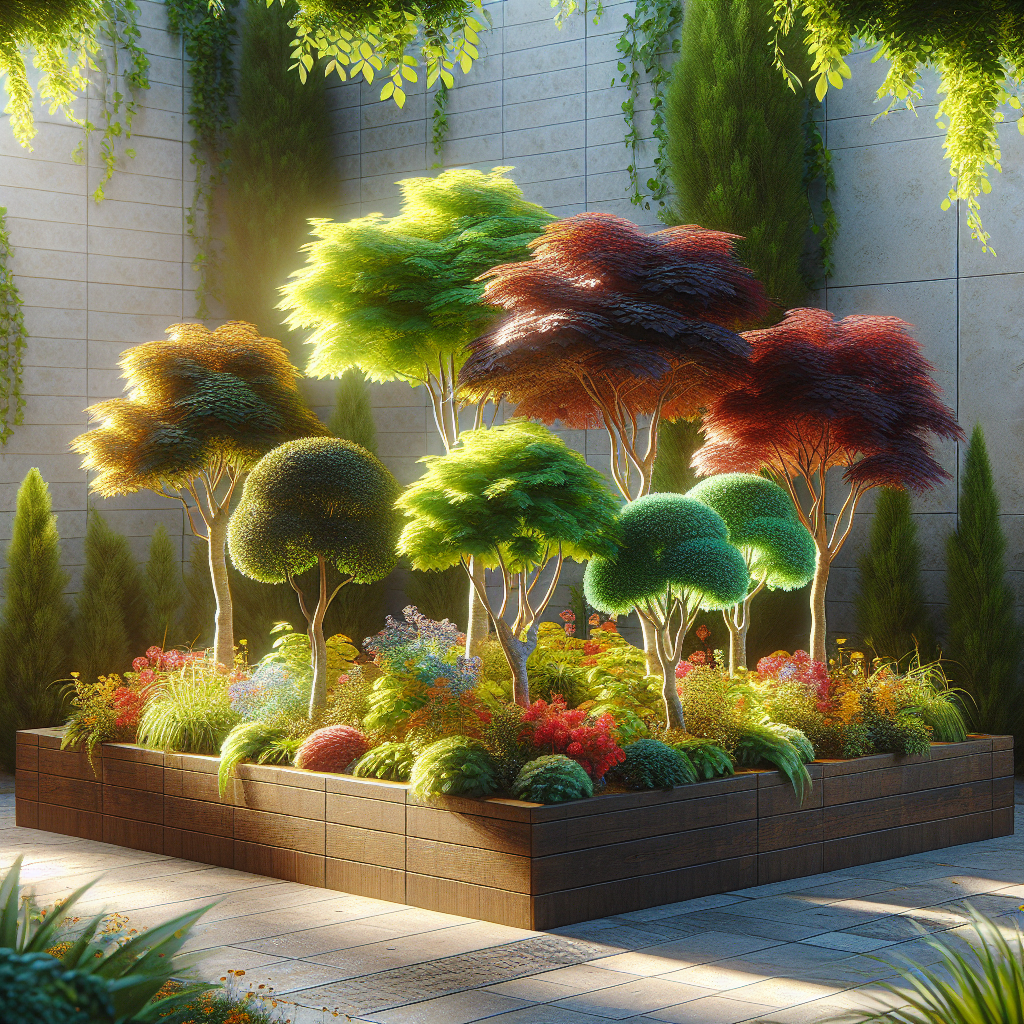
In the world of gardening, the focus often leans toward sprawling landscapes adorned with towering trees, vibrant flowers, and extensive vegetable patches. However, smaller garden spaces or those with a specific aesthetic can greatly benefit from the addition of dwarf trees. These compact, hardy plants have gained popularity among gardeners for their striking appearance, versatility, and ability to fit even the most snug of spaces. In this article, we’ll delve into the fascinating world of dwarf trees for garden beds, exploring their advantages, suitable species, care requirements, and much more.
What are Dwarf Trees?
Dwarf trees are miniature versions of standard trees, typically reaching heights of 1 to 10 feet when fully mature, depending on the species. They are well-suited for small spaces, making them perfect for urban gardens, patios, or even as focal points in exceptionally small garden beds. Dwarf trees can produce the same stunning foliage, flowering potential, and fruiting capability as their larger relatives, but without the overwhelming size.
Why Choose Dwarf Trees?
-
Space Efficiency: Dwarf trees are ideal for compact environments where traditional trees would take up too much space. They can be incorporated into garden beds, borders, or containers, allowing gardeners to maximize their landscape’s potential.
-
Aesthetic Value: With their unique shapes, flowers, and fruits, dwarf trees can add significant visual interest to any garden. They serve as focal points or can complement other plants, creating a well-balanced landscape.
-
Versatility: Dwarf trees can be grown in various settings, including courtyards, balconies, or even indoors, making them accessible for anyone, regardless of their outdoor space.
-
Less Maintenance: Generally, dwarf trees require less pruning and care than their larger counterparts. Their reduced size means that they can fit well into smaller garden beds, reducing the labor associated with their upkeep.
-
Ecosystem Contributions: Dwarf trees provide essential habitats for local wildlife, including birds and beneficial insects. They also contribute to pollination when they bloom.
Popular Types of Dwarf Trees
When selecting dwarf trees for your garden beds, it’s vital to choose species that are well-suited to your climate, soil, and gardening goals. Below, we outline some of the most popular dwarf tree species that can enhance your garden.
1. Dwarf Japanese Maple (Acer palmatum)
Description: Known for its stunning foliage, the Dwarf Japanese Maple boasts intricate leaf shapes and vibrant colors ranging from soft greens to deep reds.
Height: Typically grows between 3 to 8 feet tall.
Ideal Conditions: Prefers partial shade and well-draining, loamy soil. It is suitable for U.S. hardiness zones 5 to 8.
Care: Minimal maintenance; occasional pruning to shape it or remove dead wood.
2. Dwarf Fruiting Trees (e.g., Dwarf Apple, Peach, and Cherry Trees)
Description: These trees produce delicious fruits while maintaining a manageable size. Varieties like ‘Garden Delicious’ or ‘Pix Zee’ are fantastic options.
Height: Ranges from 4 to 8 feet.
Ideal Conditions: Full sunlight is essential for maximum fruit production. They are best grown in well-draining soil.
Care: Prune annually to remove deadwood and promote healthy growth. Regular watering is crucial during fruiting seasons.
3. Dwarf Alberta Spruce (Picea glauca ‘Conica’)
Description: This conifer has a classic pyramidal shape, dense green foliage, making it a great choice for this aesthetic garden beds.
Height: Grows to around 3 to 6 feet tall.
Ideal Conditions: Thrives in full sun to partial shade and is tolerant of a variety of soil types.
Care: Limited watering and occasional shaping required to maintain its form.
4. Dwarf Pomegranates (Punica granatum ‘Nana’)
Description: Apart from their ornamental beauty, dwarf pomegranates have fruit that is both juicy and tangy. Their bright, red flowers add extra charm.
Height: Usually reaches heights of 2 to 3 feet.
Ideal Conditions: Prefers full sun and well-draining soil. Best in U.S. hardiness zones 7 to 10.
Care: Minimal; some pruning in late winter to encourage fruit growth.
5. Dwarf Red Leafed Sand Cherry (Prunus besseyi ‘Jefrees’)
Description: This tree’s stunning burgundy foliage adds a splash of color throughout the seasons, and its spring blossoms are mesmerizing.
Height: Averages around 3 to 5 feet.
Ideal Conditions: Thrives in full sun and well-draining soil, making it a hardy addition to any garden.
Care: Fertilize occasionally and prune to shape as desired.
Location and Planting
When deciding where to plant your dwarf trees, keep in mind their sunlight and space requirements. Here are some key considerations:
1. Sunlight Needs
Most dwarf trees prefer full sun, which means at least 6 to 8 hours of direct sunlight per day. However, some species, like certain Japanese maples, thrive in partial shade. Always check the specific requirements for your chosen dwarf tree.
2. Soil Quality
Dwarf trees often do best in well-draining, fertile soil. If your garden bed has heavy clay or sandy soil, consider amending it with organic material to promote better drainage and nutritional content.
3. Proper Spacing
Although dwarf trees don’t take up as much space, they still need room to grow. Be mindful of how much space you have in your garden bed and avoid overcrowding, which can promote disease and competition for nutrients.
Care and Maintenance
Watering
Establishing a regular watering schedule is crucial, particularly for newly planted dwarf trees. Aim to keep the soil consistently moist but not soggy. It’s beneficial to water deeply once a week rather than giving small amounts daily, as this encourages deep root growth.
Pruning
While dwarf trees require less pruning than standard trees, some shaping can enhance their structure and health. Conduct pruning during the dormant season (fall or winter) to minimize stress. Avoid removing more than 25% of the tree in a single year.
Fertilization
Most dwarf trees benefit from a light fertilization regimen in early spring. Use a balanced, slow-release fertilizer to encourage healthy growth without promoting excessive foliage at the expense of flowers or fruits.
Pest Management
Regularly inspect your dwarf trees for common pests such as aphids, spider mites, and scale insects. Employ organic pest management techniques like introducing beneficial insects or using insecticidal soap to maintain a healthy garden.
Designing with Dwarf Trees: Tips & Ideas
1. Focal Points
Dwarf trees work wonders as focal points in garden beds. Position them at the center of a planting scheme, allowing their unique characteristics to stand out.
2. Mixed Planting
Consider combining dwarf trees with other plants to create a layered, multi-dimensional garden. Pair them with flowering perennials, ground covers, and ornamental grasses to achieve an appealing visual contrast.
3. Container Gardening
For those with limited ground space, dwarf trees can thrive in pots or containers. Choose containers that allow for proper drainage and are large enough that they won’t restrict root growth.
4. Seasonal Interest
Select dwarf trees that offer year-round appeal. Look for trees with beautiful spring blooms, lush summer foliage, stunning fall colors, and interesting bark textures in winter to ensure visual interest throughout the year.
5. Themed Gardens
Consider creating themed gardens featuring dwarf trees. For instance, a Japanese zen garden could showcase Dwarf Japanese Maples alongside stones, moss, and water features for a tranquil atmosphere.
Frequently Asked Questions
1. Can dwarf trees survive in cold climates?
Yes, many dwarf trees are hardy to various zones. Always check the hardiness zone for your specific tree to ensure it can withstand your local climate.
2. How often should I fertilize my dwarf trees?
A light application of slow-release fertilizer in early spring is generally sufficient. Be cautious not to over-fertilize, as this can lead to excessive leaf growth with fewer flowers or fruits.
3. Do dwarf trees attract pests?
Like any plant, dwarf trees can attract pests, but they are often less susceptible to severe infestations than larger trees due to their size. Regular inspections and organic pest management will help keep them healthy.
4. Can I grow dwarf trees indoors?
Yes! Many dwarf trees can thrive indoors, provided they receive enough sunlight. Choose a bright, sunny spot and ensure adequate drainage.
5. Are dwarf trees good for attracting pollinators?
Absolutely! Dwarf flowering trees, in particular, are great for attracting bees, butterflies, and other pollinators, contributing positively to your garden ecosystem.
Conclusion
Dwarf trees offer a remarkable opportunity for garden enthusiasts, particularly those with limited space. Their aesthetic appeal, adaptability, and lower maintenance requirements make them a popular choice for a variety of landscape designs. By caring for these magnificent trees and thoughtfully incorporating them into your garden beds, you can create a beautiful, inviting space that showcases nature’s splendor. Whether you’re aiming for a tranquil zen garden, a vibrant fruit display, or an architectural focal point, dwarf trees are the perfect addition to your gardening repertoire.