
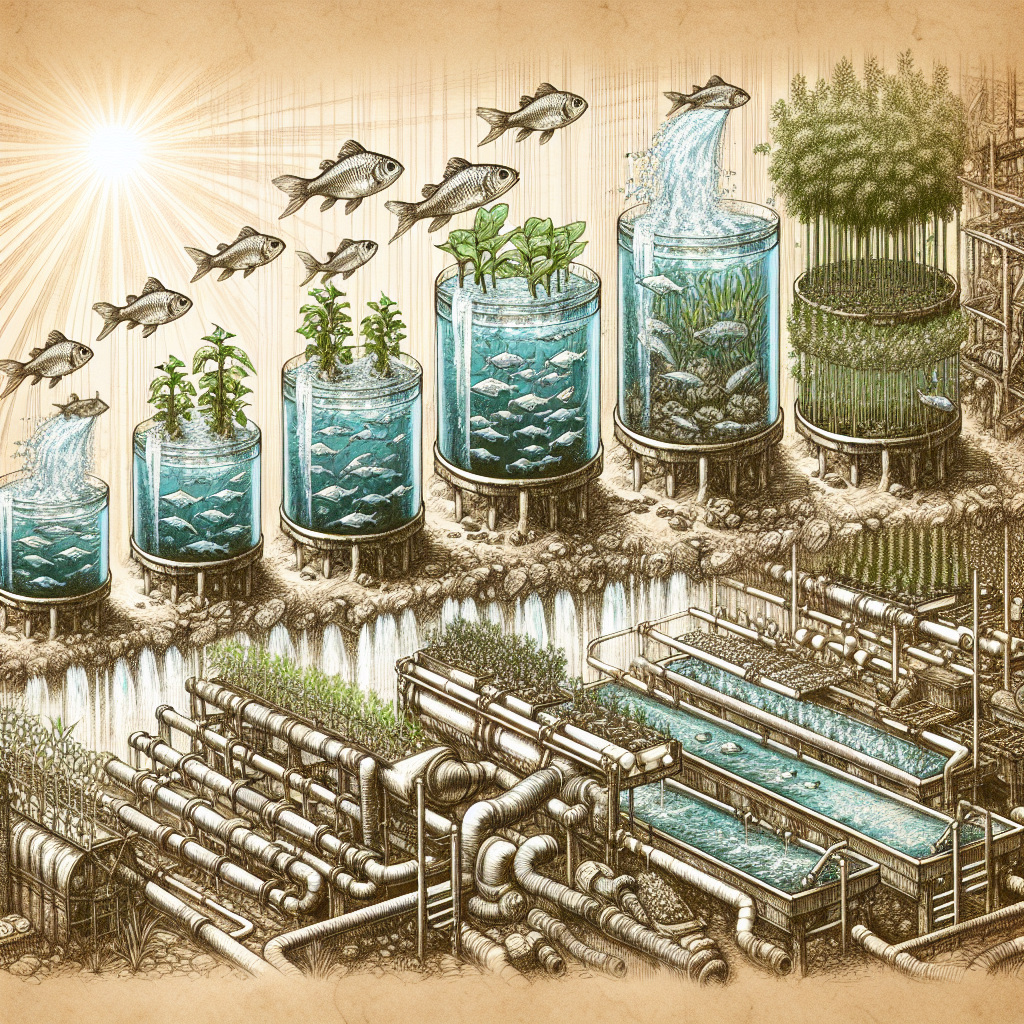
Aquaponics, a sustainable method of food production that combines aquaculture and hydroponics, has gained recognition as a powerful practice that can address modern agricultural challenges. While it may seem like a modern innovation, the roots of aquaponics stretch deep into history, intertwining with the ancient practices of various cultures. This detailed exploration takes a journey through time to uncover the origins, evolution, and growing significance of aquaponics in our contemporary world.
Understanding Aquaponics
Before delving into its rich history, it’s essential to define what aquaponics entails. At its core, aquaponics is a symbiotic system that merges aquaculture (the raising of fish) with hydroponics (the cultivation of plants without soil). The relationship is mutually beneficial; fish waste provides an organic nutrient source for the plants, while the plants help filter and purify the water, creating a sustainable ecosystem.
Key Components of Aquaponics
- Aquaculture Component: Involves the raising of fish, which produce waste.
- Hydroponic Component: Involves the cultivation of plants in water.
- Biofiltration System: Helps convert fish waste into nutrients for the plants.
The Origins of Aquaponics
Ancient Practices
The story of aquaponics can be traced back thousands of years. In ancient Mesopotamia and other early civilizations, agricultural practices included the use of fish waste to fertilize crops. Evidence suggests that ancient Chinese civilizations practiced a form of aquaponics as early as 2000 BC, notably seen in the floating gardens of Xochimilco, Mexico.
The Chinese Influence
The Chinese were among the first to document aquaponic practices, particularly in rice farming. In the southern regions, farmers would flood rice paddies with water, in which fish also inhabited. The fish feces would fertilize the rice plants, creating an early model of integrated farming. Question: How did this early method benefit Chinese farmers?
Answer: This approach allowed farmers to maximize land utility, using fish as a food source while ensuring healthy growth for their rice crops with minimal additional inputs.
The Aztecs and Chinampas
Around 1300 AD, the Aztecs developed a highly sophisticated system known as chinampas in the shallow lake areas of what is now Mexico City. This method involved creating artificial islands to grow crops, while also incorporating fish farming. Question: What were chinampas, and how did they function?
Answer: Chinampas were floating gardens that utilized the lake’s water to support crops. Fish were raised in the water, and their waste would provide necessary nutrients for the plants.
These systems enabled the Aztecs to produce a high yield of diverse crops, feeding their large population and ensuring food security.
The Roman Empire and Fish Culture
In the Roman Empire, aquaculture evolved with the establishment of large fish farms, known as piscicultures. This period saw the integration of aquaculture within agricultural practices, although not as systematically as modern aquaponics. Fish were cultivated in ponds and were often used to fertilize other crops. Question: How did the Romans contribute to aquaponics?
Answer: The Romans demonstrated the significance of integrating fish farming with crop cultivation, laying groundwork for concepts that would eventually develop into modern aquaponics.
The Renaissance to the 19th Century
Increased Understanding of Ecosystems
As society transitioned into the Renaissance and beyond, scientists began to understand more about ecosystems, although it would take quite some time for aquaponic principles to emerge as they are known today. Various agricultural practices adopted more holistic and sustainable approaches to farming, inspired by natural cycles.
The 18th Century Pioneers
In the 18th century, explorers and botanists began to document practices from different cultures, including indigenous methods of aquaculture and plant cultivation. One notable figure was John Evelyn, an English writer and gardener, who in 1664 published “Sylva,” discussing the importance of permaculture.
During this period, there was a broader realization of how humans could work in tandem with nature rather than against it. Question: What role did explorers play in advancing aquaponic knowledge?
Answer: Explorers played a key role by sharing knowledge about indigenous farming methods, which included integrating fish and plants, shaping ideas around sustainable agriculture practices.
The 20th Century: A New Era
The Development of Hydroponics
The 20th century saw significant advancements in agricultural science, particularly through the development of hydroponics. In the 1930s, scientists began quantifying plant nutrient requirements and designing systems that supported soil-less agriculture. This paved the way for the concept of aquaponics, as specialized setups blended aquaculture with hydroponic methods.
Bill Mollison and Permaculture
In the 1970s, Bill Mollison and David Holmgren introduced the concept of permaculture, an agricultural philosophy that emphasizes sustainable and self-sufficient agricultural ecosystems. Their work inspired a renewed interest in integrating fish and plants within closed-loop systems, enhancing the understanding and practice of aquaponics.
The 1990s: A Modern Definition Emerges
In the 1990s, aquaponics began to gain prominence in academic and agricultural circles. Researchers, such as Dr. James Rakocy from the University of the Virgin Islands, set the stage for modern aquaponics systems by developing simple, replicable models. Question: What was Dr. Rakocy’s significant contribution?
Answer: Dr. Rakocy created a cost-effective aquaponics system that allowed fish and plants to grow symbiotically, highlighting the principles of balanced ecosystems.
The 21st Century: Growth and Challenges
A Sustainable Solution to Global Issues
As the world grapples with challenges like climate change, rapid urbanization, and population growth, aquaponics has emerged as a viable solution to food insecurity and agricultural sustainability. Increasingly, urban areas are adopting aquaponics systems to provide fresh produce and fish locally.
Education and Community Initiatives
In recent years, educational institutions and community organizations have embraced aquaponics as a teaching tool. Schools worldwide have begun incorporating aquaponics into their science programs, engaging students in hands-on learning experiences. Question: How does aquaponics serve educational purposes?
Answer: Aquaponics is a practical learning tool that teaches students about biology, ecology, and sustainable practices, encouraging them to develop critical thinking and problem-solving skills.
Technological Advancements
The rise of technology has introduced innovative equipment and solutions for aquaponic systems. Remote monitoring, automation, and artificial intelligence are increasingly used to enhance efficiency and manage aquaponic farms. Vertical farming, combining urban agriculture and aquaponics, has become popular due to space constraints in city environments.
The Future of Aquaponics
As we look ahead, the future of aquaponics seems promising, with ongoing research focused on optimizing systems, improving yields, and making aquaponics more accessible. Urban aquaponics is poised to play a significant role in transforming food production, making fresh fish and vegetables available in metropolitan areas. Additionally, trends toward organic farming and sustainability resonate with the fundamental principles of aquaponics.
Conclusion: Aquaponics as a Legacy
The history of aquaponics is a rich tapestry woven through centuries of human ingenuity, survival, and sustainability. From its ancient origins to its modern advancements, aquaponics represents a balanced approach to food production that aligns with environmental consciousness.
Questions for Future Exploration
- Can aquaponics be scaled to larger operations, and how?
- What are the economic implications of adopting aquaponics on a larger scale?
- How do regional climates affect aquaponic practices, and what adaptations are necessary?
Aquaponics not only serves as a solution to present-day challenges but also carries the lessons of history into the future, echoing the wisdom of ancient practices while embracing contemporary innovations. As we continue to navigate the complexities of food production in a dynamic world, the lessons learned from our ancestors will undoubtedly guide us in creating a sustainable future.